

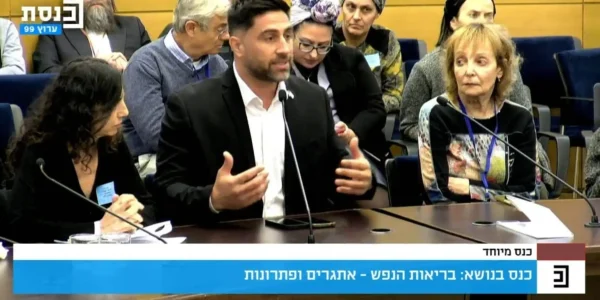
This week I stood before members of the Knesset and elected officials, and most of all – before our shared responsibility as a society. I came to the Knesset as a representative of our association, an association that was founded out of pain, out of a mission, and above all out of the understanding that we cannot leave our soldiers behind.
Post-traumatic stress disorder is not just a personal story of a lone soldier. It is the daily reality of thousands of discharged soldiers, who returned home with scars that are invisible to the eyes, but they are there – in every sleepless night, in every anxiety attack in the middle of the day, in every moment when they try to integrate into civilian life and fall through the cracks.
When we founded the association, we knew that we could not wait. So we began to act: we established support groups, connected soldiers with professional therapists, ensured legal support for those who are struggling to have their rights recognized, created employment opportunities so that they would not feel alone. We saw how the right tools can make a real difference, but we also understood that it is not enough.
This is why I came to the Knesset. To say it clearly – the responsibility is ours all. A soldier with post-traumatic stress disorder does not have to fight the system, does not have to prove over and over again that he is wounded. The state sent them into battle, and the state must fight for them too.